
Should you buy now or wait? House prices and mortgage rates for buyers explained


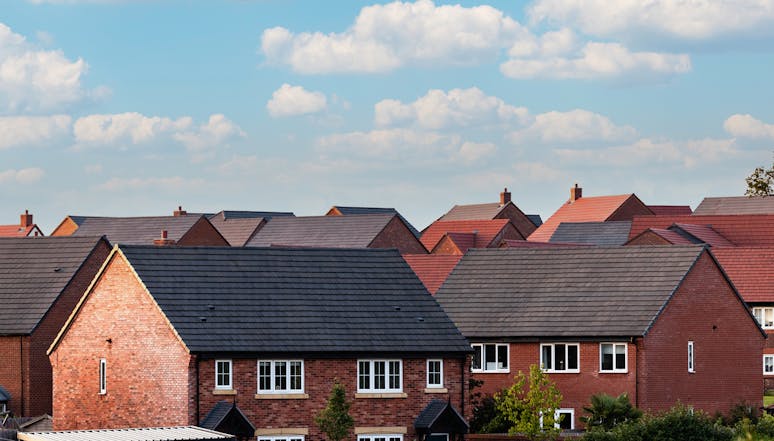
House prices and mortgage rates have been on a bit of a wild ride this year, as war in the Middle East affects the global economy as well as consumer confidence.
Mortgage costs climbed up earlier this year, before dipping back down and are now climbing again.
At the same time, house prices are softening and have reached a six-month low, according to the Nationwide index.
If you are a first-time buyer, it can be difficult to work out what is happening in the market. Will house prices come down further and will mortgage rates keep rising over the Autumn?
We take a look at the outlook.
What is happening with house prices?
The UK housing market has been through a bit of a rough summer.
Annual growth in August is up by 1.6%, according to lender Nationwide, but average non-seasonally adjusted prices have fallen by more than £3,400 since April.
Despite, the dip prices are still close to record highs which has pushed home ownership out of reach for many aspiring buyers.
Robert Gardner, Nationwide's chief economist, said: "Market activity and house prices have remained subdued in recent months, in part reflecting the uncertain economic backdrop.
"Geopolitical tensions remain high, with the conflict in the Middle East exerting upward pressure on energy prices and market interest rates."
The positive news for buyers is that in a slower market in can be easier to negotiate price discounts.
At the same time, Mr Gardener notes: “Underlying affordability is improving, as house price growth remains well below earnings growth."
He predicts that activity will pick up over the coming months as long as the energy shock wanes and if interest rates fall back.
Indeed, if tensions in the Middle East settle down, it should help ease fears of higher inflation.
High inflation means the cost of living rises for everyone and can trigger the Bank of England into raising interest rates.
Are mortgage rates going up or down?
Mortgage rates have been climbing again in recent weeks after dipping back down in June.
The cost of a mortgage jumped earlier this year as fighting broke out in the Middle East.
The average two-year fixed rate stands at 5.55% compared to 5.46% at the start of July, according to data from Moneyfacts.co.uk but this is still lower than peaks seen in April of around 5.89%.
HSBC and TSB are also among the lenders that have recently been trimming rates.
Nobody has a crystal ball, so it's impossible to say exactly how rates will change over the coming weeks and months.
Eye will be on the war in the Middle East, as the price of oil affects the outlook for inflation which in turn affects interest rates and mortgage pricing.
If you are thinking of buying soon, one option is to get a mortgage offer in place which can last for around six months.
You will then have some protection if rates rise further or can apply for a fresh deal if rates move down instead.
Should I buy a house now or wait?
Trying to time the market can be a difficult game, instead it's usually better to go on your own personal circumstances.
It's a good idea to talk to an independent mortgage broker about your options.
Mortgage advisers can tell you how much you can borrow, as well as which products you may qualify for.
A good broker will also be able to tell you more about schemes that you may not have previously considered such as shared ownership.
Waiting longer can give you longer could give you more time to build up a deposit and therefore qualify for lower mortgage rates.
Again, a broker can help advise on these options.
Whether you should buy now or wait really depends on your own finances and circumstances.
If you feel ready to move, getting a mortgage offer in place can lock in rates at today's rates while you can reapply if costs go back down.
If you're not sure if you you feel sure about where you want to move or the type of home you want, waiting longer could make more sense.
Researching your options and looking at what's available in your local area can put you in a better position so that you can move quickly when you feel ready.
Where are house prices falling?
House price movements vary depending on where you live.
The latest official data shows that annual price growth has slowed across England, Wales and Scotland, but prices remain higher than a year earlier.
London has been one of the weaker-performing parts of the market, while some northern and Scottish markets have held up better.
Buyers are better placed to monitor local house prices rather than relying solely on the UK average.
Try chatting to a couple of local estate agents to get a flavour of what is happening locally.
If you're considering buying, you can also check recent sold prices for properties similar to the properties you're interested in.
A home's asking price isn't necessarily what it will ultimately sell for - remember that you can always try to negotiate.
You'll be in more power to get a discount if you can move quickly. This usually means that you have a mortgage offer in place and are not in a property chain.

< Back to articles