
Energy price cap to drop by 7% from April - what it means for you


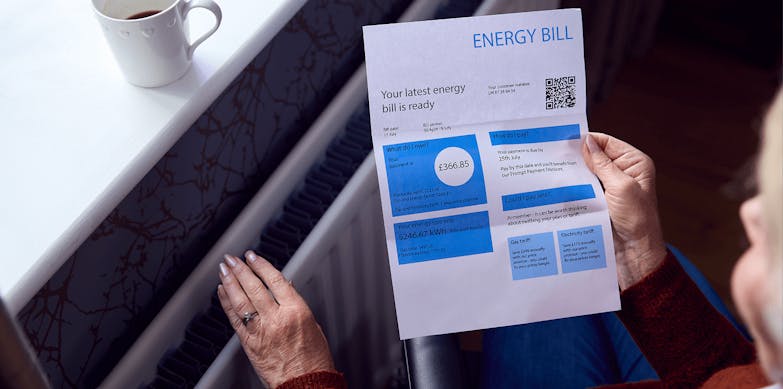
Energy bills are set to fall this spring. Ofgem has announced that the energy price cap will drop by 7% from 1 April to 30 June 2026. This means a typical household that uses both gas and electricity and pays by Direct Debit will pay £1,641 a year; that’s £117 less than the current level. It works out at around £10 a month in savings.
Compared with the price cap level a year earlier (April to June 2025), bills are now 11% lower, or £208 cheaper for the typical household.
This drop is mainly due to changes in how some Government schemes are funded, plus falling wholesale energy prices.
What the new April rates will be
From 1 April to 30 June 2026, if you’re on a standard variable tariff and pay by Direct Debit, you’ll pay on average:
Electricity
24.67p per kWh
57.21p daily standing charge
Gas
5.74p per kWh
29.09p daily standing charge
What is the energy price cap?
The energy price cap is a limit on the unit rates your supplier can charge you, that’s the price for each unit of gas and electricity you use, plus the daily standing charge, which is the fixed amount you pay each day to stay connected.
It’s based on what Ofgem thinks a typical household in the UK is likely to use up in a year. The typical household means 2 to 3 people living in a medium sized home (2-3 bedrooms).
The energy price cap figure of £1,641 isn’t the maximum your energy provider can charge you. It’s just an estimate. Your actual bill could be lower or higher depending on factors like how big your house is, how well insulated it is, how many people live there, how much cooking, heating, and hot water you use.
What this means if you’re on a standard variable tariff
If you’re on a default (standard variable) tariff, this new price cap will apply to you automatically as variable deals fluctuate based on the energy price cap. The one announced today will apply from April. Ofgem will then publish the next price cap (for July to September 2026) by 27 May 2026.
What does the April energy price cap mean if you’re on a fixed tariff?
If you fixed your energy deal, this announcement won’t change your price. Your fixed rates stay the same until your deal ends.
If your fix is higher than the new price cap, you may want to:
check if your supplier allows you to leave early for free (some suppliers allow this even if you’re on a fixed deal)
look at switching back to a variable tariff (some suppliers may let you switch to a different deal if you stay with them)
If your fix is lower, it may still be worth staying put as you’re still getting a decent deal as energy bills falls.
Key takeaways
The energy price cap falls 7% from 1 April 2026.
A typical household will pay £1,641 a year, £117 less than before.
Electricity: 24.67p per kWh, 57.21p standing charge.
Gas: 5.74p per kWh, 29.09p standing charge.
Bills are falling due to funding changes, lower wholesale prices, and Government scheme reforms.
Next cap update comes 27 May 2026.

< Back to articles