
Are plug-in solar panels worth it? How much you could save as UK rules change


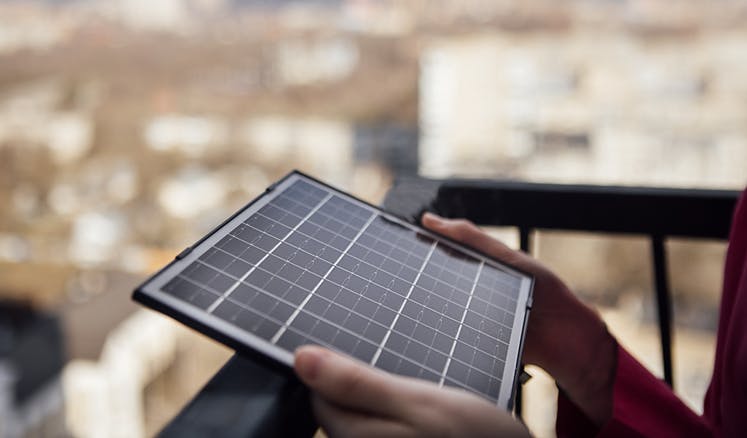
Until now, saving on energy bills through solar panels has been a benefit reserved for homeowners who can get the tech installed on their roof.
This is about to change, as the government this week lifts the ban on plug-in solar panels being sold in the UK.
It means that from 27 August, you can expect to start seeing the 'plug and play' solar in shops such as Lidl and Iceland.
The move opens up solar energy savings to renters and people owning flats as the smaller 'plug-in' panels don't come with the upfront installation costs that come with the big roof panels you see on homes across the UK.
But the amount of energy you can generate is also not as high.
So should you be buying plug-in panel? Here we look at whether the technology is worth it and how it could work for you.
What is plug-in solar?
Just like big solar panels, plug-in solar converts energy from the sun to generate electricity for your home.
The power generated can be used to keep appliances in your home going, rather than drawing from the National Grid, helping you to save on your energy bills.
The technology comes without the high costs and complexity of a full rooftop installation, which is usually at least around £5,000.
Sometimes described as plug and play solar or balcony solar, the systems have one or two solar panels connected to a microinverter.
The solar power can be used directly through a mains socket in a similar way to any other device.
How much do plug-in solar panels cost?
Plug-in solar devices In Europe currently cost around £400-£600, and is expected to come at a similar price when shops in the UK start selling the technology.
It's still a fairly hefty upfront investment, but considerably cheaper than rooftop solar panels which usually cost from around £5,000- £6.000.
The government says the plug-in panels could significantly cut energy bills with savings expected to be around £100 a year.
At this rate, you could roughly expect the savings to have paid for the device costs after five years, getting genuine saving after this point.
The exact amount you save will depend on weather conditions and where you position your panels.
Do plug-in solar panels need an electrician?
Plug-in solar panels can be connected to a standard mains socket without needing an electrician to make the solar connection.
However, you could need to get a suitable outdoor electrical socket installed which would need a qualified electrician to install one.
Outdoor sockets used for plug-in solar should be weatherproof and appropriately rated. The London Fire Brigade recommends an IP65-rated outdoor installation.
You should also follow the manufacturer's instructions and use the correct mounting brackets and fixings, which may need a handy man depending on your DIY skills.
Can renters use plug-in solar panels?
Plug-in solar is set to make savings on energy bills through self-generated power accessible to renters.
However, because plug-in systems may need to be mounted on a balcony, wall or other suitable outdoor area, you'll probably still need to get permission from a landlord.
Check the terms of your tenancy agreement before paying for device, as there could be restrictions around external walls .
Can you get paid for electricity you don't use?
Traditional rooftop solar owners can potentially receive payments through the Smart Export Guarantee (SEG) when they send renewable electricity back to the grid.
However, you'll unlikely be able to do the same with a plug-in system.
You'll also generate much less electricity from plug-in panels than a rooftop.
The main financial benefit of plug-in solar will come from using the electricity you generate yourself, so you need to buy less from your supplier.
But bear in mind that if your panels produce electricity while you're out at work, for example, there may not be much household demand for it.
And without battery storage, you won't be able to store it for using at a later time.
Is plug-in solar worth it?
For some households, plug-in solar could be a good way to reduce electricity bills over the long term.
However, you'll likely need to wait a few years before your upfront investment pays off.
As such, you'll likely want to be fairly sure that you'll be in the same location during that time or that you will move somewhere else that you can keep using the tech.
You should consider if the location where you'd keep the panels, such as a balcony, is well-positioned to get as many hours as possible of sunshine.
The price for panels may come down if more competitors enter the market, so it could be worth waiting to see what comes on sale before jumping straight in for the first available models.
Why has the government changed the rules on plug-in solar?
It's in part hope that helping households to generate more power themselves will help make the UK less reliant on global fossil fuel markets.
This is particularly important as conflict in the Middle East has sent the energy prices soaring for UK households.
Plug-in solar is already widely used by households across Europe. Germany alone has around half a million new devices plugged in per year.
It's hoped that households in the UK could follow a similar pattern.

< Back to articles