
Are Easter eggs still real chocolate? The truth about shrinkflation, recipe changes and what you’re really paying for


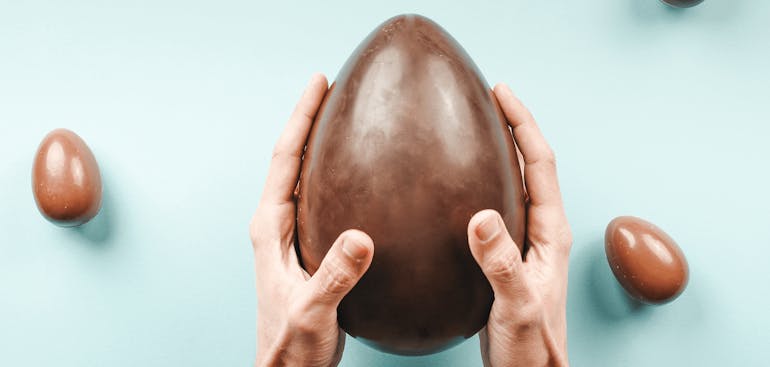
I saw the first one on Boxing Day when I was rummaging for post-Christmas yellow sticker bargains; not just one, shelves full of them - Giant eggs, Mini eggs, eggs inside other eggs, Easter had arrived in my Morrisons before 2025 had been ushered out of the door. And Cadburys Crème eggs have never actually gone away – which I’m fine with, by the way.
But lurking beneath the sparkle is a slightly awkward question; are Easter eggs still actually made of chocolate these days?
The short answer is yes, most mainstream Easter eggs in the UK are still legally chocolate. The longer answer is that you are probably getting less of it than you used to, and in some corners of the confectionery aisle, things that look like chocolate are no longer allowed to call themselves chocolate at all.
Welcome to the strange modern world of chocolate.
The case of the shrinking Easter egg
Shrinkflation is when a product quietly gets smaller while the price stays the same or rises. Chocolate has been hit hard by rising cocoa and dairy costs, and many big brand Easter eggs have slimmed down over recent years.
That large egg that once felt like a serious achievement to demolish now feels suspiciously light. Boxes that used to rattle with extra chocolates contain fewer surprises, but the price tag has not shrunk along with it.
The result is simple. You pay the same, you get less chocolate. The bunny, it seems, is also cutting costs.
When chocolate is not allowed to call itself chocolate
Here is where it gets properly confusing.
UK law has strict rules about what can be sold as chocolate. If a product drops below minimum cocoa and milk content levels, it cannot legally be labelled chocolate. It must instead be described as having a chocolate flavour coating.
And this is not theoretical. Several nostalgic British favourites have quietly crossed that line in recent years. Childhood lunchbox icons the Toffee Cris, Blue Riband, Penguin bars and Club biscuits. They still sit in the chocolate aisle, they still look familiar. But technically, they are now chocolate flavoured rather than chocolate.
It is a small wording change that hides a big shift in ingredients, usually involving less cocoa and more vegetable fats. Most shoppers would never notice unless they read the fine print while wrestling a basket and a child.
Has Cadbury’s chocolate changed?
No conversation about British chocolate is complete without Cadbury. And ever since the company was bought by Kraft, now Mondelez, in 2010, many shoppers have sworn blind that Cadbury chocolate has never tasted the same again.
Some insist Dairy Milk is sweeter, while others say the texture feels different. Creme Eggs have been accused of losing their magic. Cadbury’s official line is that the core Dairy Milk recipe has not been fundamentally reformulated and still meets chocolate standards, but the strength of public opinion tells its own story.
Whether the recipe changed or not, the perception stuck. And in a cost-of-living era where people feel they are paying more for less, that nostalgia for how chocolate used to taste is part of the wider conversation. Put up our bills if you must, but leave our chocolate alone.
So are Easter eggs next?
For now, mainstream Easter eggs from major brands still qualify as real chocolate under UK rules and have not been downgraded to chocolate flavour products. But many now contain less chocolate than they did just a few years ago, thanks to thinner shells and smaller weights.
Alongside them, vegan and dairy free Easter eggs have also grown in popularity. These use plant-based alternatives and are clearly labelled, but they add to the sense that the definition of an Easter egg has become broader than it once was.
How to avoid getting swindled by the Easter Bunny
You do not need a law degree to shop smarter at Easter. A few simple checks help:
- Look at the weight on the box, not just the price
- Compare unit prices per 100g on shelf labels
- Consider supermarket own brands for better value – but make sure you include multibuy options and loyalty prices in your calculations; prices that feel very inflated might be that high so they can come down in a blaze of glory.
- Remember that a bar can sometimes beat an egg for pure chocolate per pound, but that is not a conversation the average child will give house room to.
The bottom line
Most Easter eggs are still real chocolate. Nobody has replaced them with candle wax just yet. But between shrinkflation, recipe tweaks and rising costs, many treats now contain less chocolate than they once did, or quietly change what they are made of.
So enjoy your Easter chocolate. And if your child asks for the Giant Kinder Egg that I’ve coveted for 35 years (alongside Hungry Hippos) consider getting it for them if you can afford it. Not a year goes by that I don’t think about it and, at 41, it feels a little late to fulfil the dream.

< Back to articles