
Is supermarket surge pricing coming to the UK? Here’s what it really means for your shopping bill


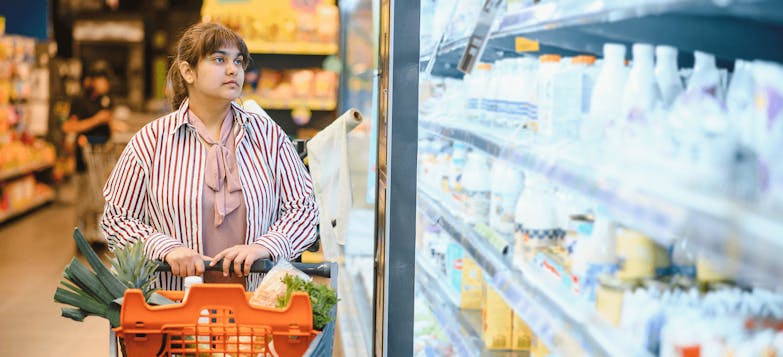
You may have seen headlines recently warning about supermarkets introducing “surge pricing”, and if that phrase makes you think of eye-watering Uber fares on a rainy Friday night or train tickets that double the moment you need them, you are not alone. The idea that the price of your weekly shop could suddenly rise because the shop is busy or demand is high feels unsettling, particularly at a time when budgets are already under extreme pressure.
At its heart, surge pricing - often called dynamic pricing - simply means prices change in response to demand. It is not a new concept. Airlines have used it for decades, hotels rely on it during peak travel periods, and ride-hailing apps use it to balance supply and demand when more people need a lift than there are drivers available. The UK government has described dynamic pricing as a system where prices respond to market conditions in real time, rather than staying fixed for long periods.
So it is understandable that shoppers are asking whether supermarkets could follow the same path, especially now that many stores are introducing electronic shelf labels that allow prices to be updated quickly without printing new tickets.
But here is the important distinction.
There is currently no evidence that UK supermarkets are using real-time surge pricing in stores
What we are seeing instead is the gradual adoption of technology that makes price changes easier and faster, rather than more frequent or unpredictable. The Bank of England has reported that around 31% of businesses expect to adopt market-responsive pricing tools by 2027, which tells us the direction of travel, but not that supermarkets are suddenly planning to change prices every hour.
In other words, the technology is arriving before the behaviour, a bit like installing a speed camera on a road that still has the same speed limit.
Why prices feel like they’re moving more than ever
One of the reasons surge pricing feels believable is that shoppers have already experienced years of price movement, shrinking pack sizes, and changing promotions. It can feel as though prices are in constant motion, even when they are following perfectly ordinary retail patterns.
Food prices rise and fall for all sorts of reasons, from harvest conditions to fuel costs to currency fluctuations, and supermarkets adjust accordingly. Add in promotional cycles, loyalty discounts, and seasonal demand, and the result can look chaotic from the outside, even when it is carefully planned behind the scenes.
It is a bit like watching the tide come in and out. If you only glance at the shoreline occasionally, the water appears to move unpredictably. If you watch for long enough, you start to see the rhythm.
Loyalty pricing has become one of the biggest money savers
If there is one pricing change that has genuinely reshaped the supermarket experience over the past few years, it is loyalty pricing.
The shelves now routinely show two prices: one for members, and one for everyone else. It can feel slightly transactional at first, as though you are being nudged into signing up for yet another app, but the savings behind those offers are real.
A review by the Competition and Markets Authority found that 92% of loyalty price promotions delivered genuine savings, with shoppers typically saving between 17% and 25% compared with the standard price. That is not a marginal difference. Over the course of a year, those percentages can add up to hundreds of pounds, particularly for households buying the same essentials week after week.
Think of loyalty pricing less like a gimmick and more like a railcard. It does not change where you are going, but it makes the journey noticeably cheaper if you remember to use it.
The real risk isn’t surge pricing. It’s paying more without realising.
Most overspending in supermarkets does not come from sudden price hikes or hidden algorithms. It tends to creep in quietly, through habits that feel harmless at the time.
Buying the same brands out of routine, assuming a multibuy offer must be good value, or overlooking a loyalty discount because you forgot to scan your card are all small decisions that add up over time. None of them feel dramatic, but collectively they can push a weekly shop well beyond what you intended to spend.
It is a bit like leaving the heating on in an empty room. You do not notice the cost immediately, but you feel it when the bill arrives.
What shoppers can do to keep costs under control
The good news is that the tools for saving money are already sitting on the shelves, and most of them do not require dramatic lifestyle changes or hours of bargain hunting. They are small adjustments that, when repeated week after week, gradually shift the balance back in your favour.
Make loyalty prices your default setting
If you are not using loyalty schemes, you are effectively shopping without a discount that is already on offer.
Government analysis shows that loyalty promotions typically reduce prices by 17% to 25%, which makes them one of the simplest and most reliable ways to bring down the cost of your shop. There is a lot of ‘too good to be true’ scepticism and I would never discourage that – be critical – but the context is Supermarkets are all competing with each other, and the big European discount chains like Aldi and Lidl, for your ‘Big Shop’ so they will do what it takes to try to get you in.
Signing up takes a few minutes, but the savings continue every time you scan your card or app. It is one of the rare situations in personal finance where the return on effort is immediate.
Treat cashback like a slow but steady rebate
Cashback programmes work a little like collecting loose change in a jar. The amounts may seem modest at first, but over time they accumulate into something meaningful.
Clever tools like thinkmoney's PlusSave feature take a portion of what you spend through give you more value for less cash, effectively lowering the price of everyday purchases without requiring you to switch supermarkets or change your shopping habits.
When combined with loyalty prices and occasional promotions, cashback can quietly reduce the total cost of your groceries month after month.
Use multibuy offers strategically, not automatically
Multibuy deals are designed to feel like value, but they only save money if the extra items are genuinely useful.
Buying three cartons of milk because they are on offer makes sense if your household will use them, buying three bags of salad that end up wilting in the fridge does not. The difference between the two is not the price tag, it is the plan.
Check out the shelf price versus competitors and consider the cost of the additional one – if you don’t need the extra, then it’s just more spend, not better value.
Think of your freezer as an extension of your cupboard
One of the simplest ways to reduce food costs is to give yourself more time to use what you buy.
Freezing food allows you to take advantage of discounts on items that are close to their use-by date, or to store bulk purchases for later. Retail workers often recommend shopping later in the day, when supermarkets reduce fresh items to clear stock, and then freezing what you cannot use immediately.
It is not a glamorous strategy, but it is an effective one. The freezer turns short-term bargains into long-term savings.
Explore the world food aisle with fresh eyes
Many shoppers walk past the world food section without realising how competitive the prices can be.
Staples such as rice, lentils, spices and cooking oils are often significantly cheaper in these aisles than in the main grocery section, even when the product is nearly identical. The packaging may look different, but the contents are frequently the same.
Think of it as shopping wholesale in miniature. You are tapping into a different supply chain that often carries lower margins.
Consider the frozen food section
Frozen food still has a slightly old-fashioned reputation, as though it belongs in the same category as beige convenience meals from the 1980s. In reality, the freezer aisle has quietly become one of the smartest places in the supermarket to stretch your budget without compromising on quality.
Frozen fruit and vegetables are often picked and frozen at peak ripeness, which means they can retain just as many nutrients as fresh produce, and sometimes more if fresh items have spent several days in transport or storage before reaching the shelves. Food standards bodies and nutrition experts consistently point out that frozen produce is nutritionally comparable to fresh, and in some cases helps reduce food waste because it lasts longer and can be used in smaller portions.
There is also a straightforward cost advantage. Frozen options are frequently cheaper than their fresh equivalents, particularly for staples like vegetables, berries and certain cuts of meat, because they can be stored for longer and sold in larger quantities without the risk of spoilage. That stability allows supermarkets to keep prices more consistent, which is helpful when fresh food costs are fluctuating.
The bigger picture
Technology will continue to change how supermarkets operate, just as it has changed banking, travel and retail. Digital price labels and smarter pricing systems are part of that evolution, and it is sensible to keep an eye on how they develop.
But the reality today is far less dramatic and much more slow burn than the headlines suggest.
Prices are still driven by familiar forces, competition, supply costs and customer demand, and shoppers still have more influence than they might think. The most powerful tool in the supermarket is not an algorithm or an app. It is attention.
Because when you understand how prices work, you are no longer reacting to them.
You are using them to your advantage.
< Back to articles