
Pay Per Plate Christmas: One in four Brits think hosts should be able to charge for Christmas dinner


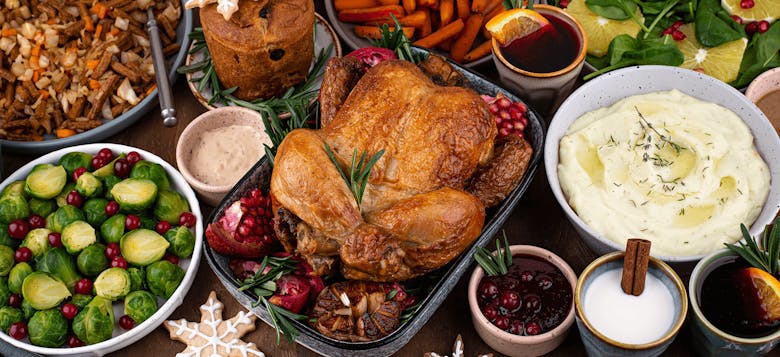
Would you send your family an invoice for their Christmas dinner? While it might sound like something straight out of a festive sitcom, nearly a quarter (24%) of Brits believe hosts should be able to charge their guests for the meal, according to research from thinkmoney.
We’re calling it the Pay Per Plate Christmas, and it could signal a significant shift in British Christmas traditions as families grapple with the rising cost of hosting.
But while younger generations are increasingly comfortable with the idea of putting a price on Christmas dinner, older Brits are considerably less convinced.
The Pay Per Plate Christmas: A Christmas tradition in the making?
Our research reveals a striking generational divide when it comes to the etiquette of paying for Christmas dinner at someone else's home.
42% of 18 to 24-year-olds believe hosts should be able to charge.
36% of 25 to 44-year-olds support the idea.
Just 7% of 55 to 64-year-olds agree.
Only 3% of those aged 65 and over think charging is acceptable.
Young adults aged 18 to 24 are 14 times as likely as over-65s to support charging for Christmas dinner.
For generations accustomed to splitting restaurant bills, sending payment requests to friends and sharing the cost of social occasions, extending that practice to Christmas dinner might not feel particularly controversial.
But for families where hosting has traditionally been seen as an act of generosity, putting a price on a plate of turkey and all the trimmings could be a difficult adjustment.
How much does Christmas dinner really cost?
According to our December 2025 research, the average British household expected to spend £254 on festive food alone, making it a significant part of the overall Christmas budget.
The research also found:
More than 54% of Brits expected Christmas food prices to rise.
The average total Christmas bill was expected to reach £787.
This represented an £87 increase on the previous year's average of £700.
When one household takes responsibility for feeding the entire extended family, the financial burden can be particularly disproportionate.
And unlike a restaurant meal, where everyone expects to pay their share, the cost of a home-cooked Christmas can be largely invisible to the people enjoying it.
Where in the UK are people most likely to charge for Christmas dinner?
Attitudes towards a Pay Per Plate Christmas vary considerably across the country.
In the North West, 28% of residents support the idea, rising to 34% in Manchester.
Support across the regions surveyed includes:
London: 36%
North East: 30%
Yorkshire and the Humber: 30%
North West: 28%
East of England: 17%
South East: 14%
South West: 6%
Londoners are six times as likely as residents of the South West to support charging for Christmas dinner.
There are also some interesting differences between individual cities:
Manchester: 34%
Norwich: 31%
Edinburgh: 23%
Liverpool: 21%
Glasgow: 21%
Stoke-on-Trent: 15%
Truro: 7%
Charging versus chipping in: More than half of Brits would happily contribute
Perhaps the most revealing finding in our research is the difference between how people feel about being charged for Christmas dinner and how they feel about offering to contribute.
While only 24% believe hosts should be able to charge, 54% of Brits would happily contribute money towards someone else hosting Christmas dinner.
And although younger adults are still the most receptive to sharing the cost, the generational divide becomes considerably smaller when contributing is voluntary.
18 to 24-year-olds: 62%
25 to 34-year-olds: 60%
35 to 44-year-olds: 57%
45 to 54-year-olds: 55%
55 to 64-year-olds: 53%
Over-65s: 46%
Among over-65s, just 3% support charging for Christmas dinner, yet almost half would happily put their hands in their pockets to help.
Edinburgh stands out among the cities surveyed, with 64% of residents willing to contribute, followed by London (62%), Leeds (59%), Liverpool (57%), Cardiff (54%) and Manchester (52%).
It suggests that the biggest barrier to sharing the cost of Christmas might not actually be money. It might be manners.
Guests are often willing to help, but hosts may feel uncomfortable asking. Meanwhile, guests who don't know how much the host has spent might not realise how valuable their contribution would be.
Are we spending too much on Christmas food nobody actually wants?
One of the easiest ways to reduce the cost of hosting Christmas is to challenge some of the food traditions that have quietly become expensive annual habits.
Our research found that 57% of Brits start stocking their Christmas food cupboards early, with 24% starting in November and 13% getting underway as early as October.
At the other end of the spectrum, 14% leave their festive food shop until the final week before Christmas, while a brave 1% wait until Christmas Eve.
Whether you're a meticulous Christmas planner or a last-minute supermarket trolley dasher, it's easy to end up buying more than you need.
Our research reveals some of the festive favourites most likely to end up in the bin:
Chocolates: 11%
Crackers for cheese: 11%
Christmas pudding: 10%
Turkey: 9%
Baileys: 5%
Before buying something because it's traditional, ask yourself whether anyone in your household actually likes it.
If you've spent the last five Christmases throwing away three quarters of a Christmas cake, this might be the year to break with tradition.
How to share the cost of Christmas dinner without charging your guests
You don't have to turn your dining room into a restaurant to make hosting more affordable. There are plenty of ways to distribute the cost and the workload without presenting your family with a bill.
1. Start a Christmas dinner group chat
Ask everyone what they actually want to eat before you write your shopping list. You might discover that nobody is particularly attached to the Christmas pudding, or that one portion of Brussels sprouts would satisfy the entire table.
It's also an opportunity for guests to volunteer to bring something.
2. Give everyone a department
Rather than asking for a financial contribution, allocate different parts of Christmas dinner to different households.
One person could take responsibility for dessert, another for the cheeseboard, someone else for drinks and another for the starters.
It reduces the host's shopping bill and means they aren't solely responsible for delivering an entire day's entertainment and catering.
3. Agree a contribution before Christmas
If you are comfortable asking guests to contribute financially, have that conversation well in advance.
Agreeing a reasonable amount based on the food costs gives everyone the opportunity to budget. A surprise payment request on Boxing Day is unlikely to go down quite so well.
4. Stop buying food for an imaginary emergency
Christmas shopping can bring out an extraordinary fear of running out of things. An extra box of chocolates, a second dessert, an emergency cheeseboard and enough potatoes to feed the neighbours can quickly add up.
Take stock of what you've already bought, shop according to the number of people you're actually feeding and remember that you don't need to cater for every conceivable appetite.
5. Let your guests help
If someone asks what they can bring, resist the automatic urge to say, “Just yourselves.”
Our research suggests that most people are happy to contribute to the cost of Christmas. Take them at their word and give them something useful to bring.
Is it rude to charge for Christmas dinner?
“Christmas dinner has become one of the most expensive meals of the year, yet there is still an expectation that whoever volunteers to host should quietly absorb the cost. It's a peculiar bit of British etiquette that we're perfectly comfortable splitting the bill in a restaurant but can feel deeply uncomfortable discussing the cost of eating together at home.
“What I find particularly interesting about this research is the gap between people's willingness to contribute and their support for charging. Almost half of over-65s would happily chip in, despite just 3% believing hosts should be able to charge. People aren't necessarily opposed to sharing the cost; they're opposed to the idea of being billed for someone's hospitality.
“There's also a lot of unnecessary spending tied up in our determination to deliver a flawless Christmas. We buy things because we've always bought them, not because anyone particularly wants them. Every family has its own version of the Christmas pudding that nobody eats, but somehow it still makes it onto the shopping list every December.
“If you're hosting this year and can't stomach the idea of invoicing your guests, start by asking them what they actually want to eat and what they'd be happy to bring. Sharing the cost and the workload isn't bad manners. It's practical, and it might mean the person hosting actually gets to enjoy Christmas too.”
Christmas shouldn't come at the expense of January
The Pay Per Plate Christmas might not become a tradition in every household, but the conversation it opens up is worth having.
Hosting Christmas dinner is a generous thing to do, but generosity doesn't have to mean taking on a financial burden you can't comfortably afford.
Whether your family decides to split the bill, divide up the shopping list or simply have a slightly less elaborate meal, the important thing is that everyone gets to enjoy Christmas without one person spending January paying for it.
About the research
The survey of 2,020 British respondents was conducted by Savanta, a member of the British Polling Council, on behalf of thinkmoney in December 2025. The research was conducted in accordance with the Market Research Society Code of Conduct.
< Back to articles